All design is redesign.
Set the goal. Redesign around it. Measure what happens. Keep improving.
Set the goal. Redesign around it.
Most redesigns start with a design. Ours start with a business outcome. The goal we set with you becomes the filter: the pages, message, and systems we keep working after launch.
- More qualified leads from organic search
- Higher close rate from inbound contacts
- Shorter sales cycle from first visit to signed client
- Better-fitting clients who understand the offer
- A site that matches a company that has outgrown its old site
Start with what works
Existing pages, rankings, messages, and lead paths are documented before any redesign decisions get made.
Redesign around the buyer
Pages are rebuilt around how visitors actually decide: message, proof, structure, and the path to a conversation.
Protect what is earned
Rankings, redirects, content equity, and trust signals carry forward into the new site instead of getting reset to zero.
Keep improving after launch
The site that launches is the first version. Behavior data and search performance feed the next improvements.
A company is already designed.
Its website, message, page order, proof, forms, and follow-up process already shape what buyers do. Some of that design is intentional. Some of it happened by accident.
A redesign is the moment to decide what should stay, what should change, and what the next version of the business needs the site to do.
From founder-led website to firm-level growth platform.
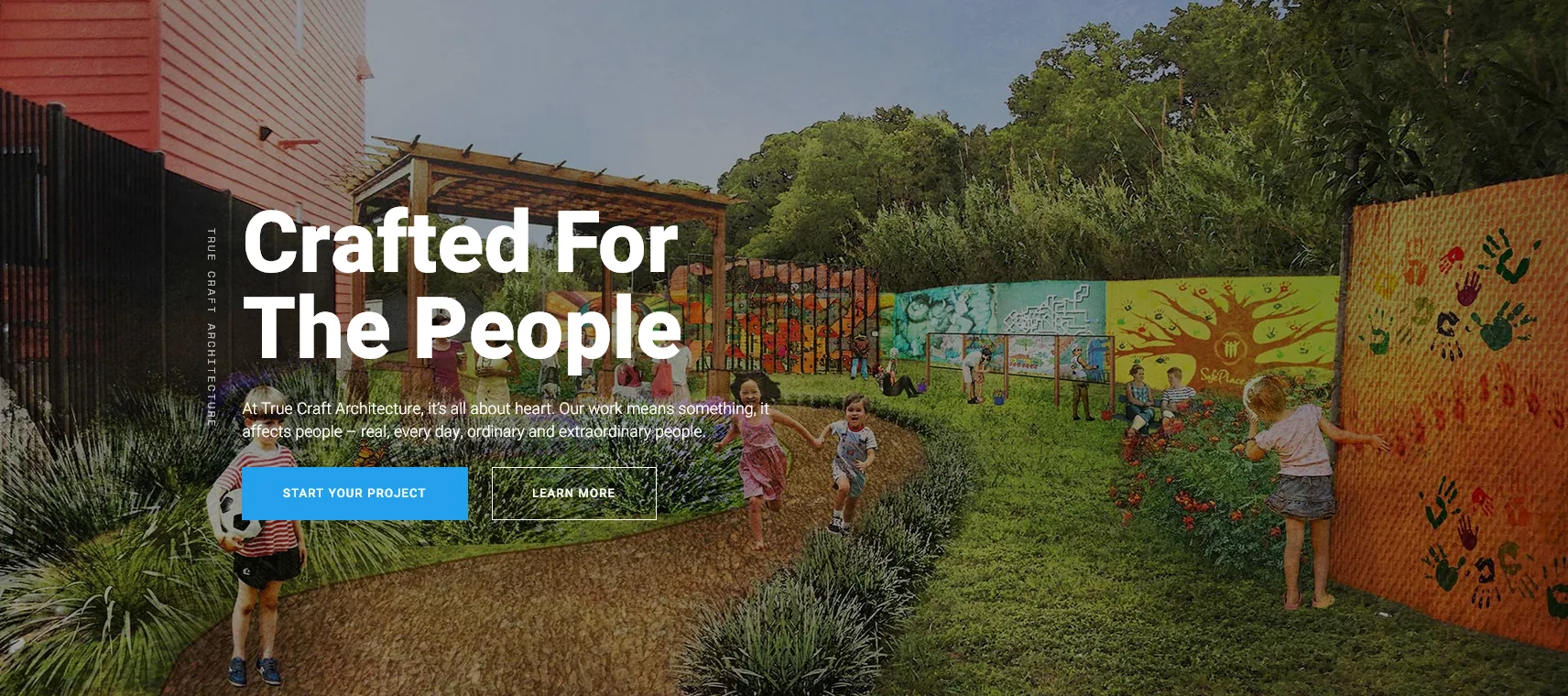
TC Architecture Firm already had a site with visual strength and a clear human message: crafted for the people. As the firm grew from one architect into a stronger team, the website needed to grow with it.
Keep the core message.
The redesign should not erase what made the brand memorable. The mission stays intact while the site becomes clearer, stronger, and easier for the right clients to act on.
Communicate the firm’s growth.
The next version needs to show that TC Architecture Firm is no longer only a founder story. It is a capable architecture team with real project experience and broader delivery capacity.
Improve the lead path after launch.
The work does not end with the rebuild. The site becomes a baseline for monthly improvement around message clarity, project proof, contact flow, search visibility, and conversion behavior.
What gets improved.
Map what the current site is already doing
Pages, rankings, content equity, lead paths, and tracking are documented so nothing useful gets lost in the rebuild.
Rebuild the message and structure around buyers
Copy, page order, proof sections, and conversion paths are redesigned around how the company’s actual buyers make decisions.
Carry forward what is earned
Search rankings, redirects, metadata, and trust signals are mapped from old to new so the redesign does not reset the work that came before.
Set up to keep improving
Analytics, tracking, and behavior tools are configured at launch so the site can keep getting better from real visitor data instead of guesswork.
Two parts. One goal.
People find the site, scan the message, compare proof, and decide whether to call, submit, leave, or come back later. The work is to improve that path.
Redesign the site.
Rebuild the message, structure, SEO foundation, mobile experience, trust signals, and contact path around the business the company is trying to grow.
Improve after launch.
Watch real visitor behavior, search performance, and lead quality. Make measured changes based on what the site is actually doing.
The redesign creates the next version. The ongoing work keeps that version from going stale.
A redesign process that keeps the important parts in order.
Review
Site, search data, content, forms, lead paths, and feedback come back as the main variables. Week 1.
Plan
Sitemap, navigation, page priorities, and decision routes. Weeks 1-2.
Rewrite
High-value pages, headers, structure, and contact paths. Weeks 2-3.
Design + build
Visual system, forms, mobile, redirects, and analytics. Weeks 3-5.
Launch
Sitemap submitted, priority URLs inspected, baseline logged. Weeks 5-8.
Improve
Monthly cycle against the goal. Ongoing.
Most redesigns end at launch. Ours keep going.
Every website is doing things its owners cannot see: pages where visitors quietly drop off, calls to action that get ignored, paths that convert better than the team realizes. The tools can surface the behavior. The discipline is knowing what to change next.
The ongoing program is a separate engagement after the redesign launches. Visitor behavior, search performance, lead quality, and conversion-path testing feed an improvement cycle: observe, decide, test, measure, and repeat. The value compounds as the site collects more data and each change has a clearer baseline.
Visitor behavior monitoring with heat maps and session review.
Monthly review of search performance and conversion paths.
Hypothesis-driven improvements prioritized by likely impact.
Results measured against the launch version of the site.
Tell us what the next version of the site needs to do.
Send the URL, where the business is now, and the goal the redesign needs to reach. We will be in touch to schedule a call.