Redesigns that earned their outcome.
The strongest redesigns are not cosmetic swaps. They protect what the current site already does well, clarify what has changed in the business, and give the next version a cleaner path to inquiries. This page collects published work, current proof, and the review framework we use before changing a site.
Message, search, proof, and conversion.
- The business is easier to understand
- Important search value is protected
- Proof is easier to find and believe
- The contact path is easier to complete
Those four tests shape the work before layout begins.
From founder-led website to firm-level growth platform.
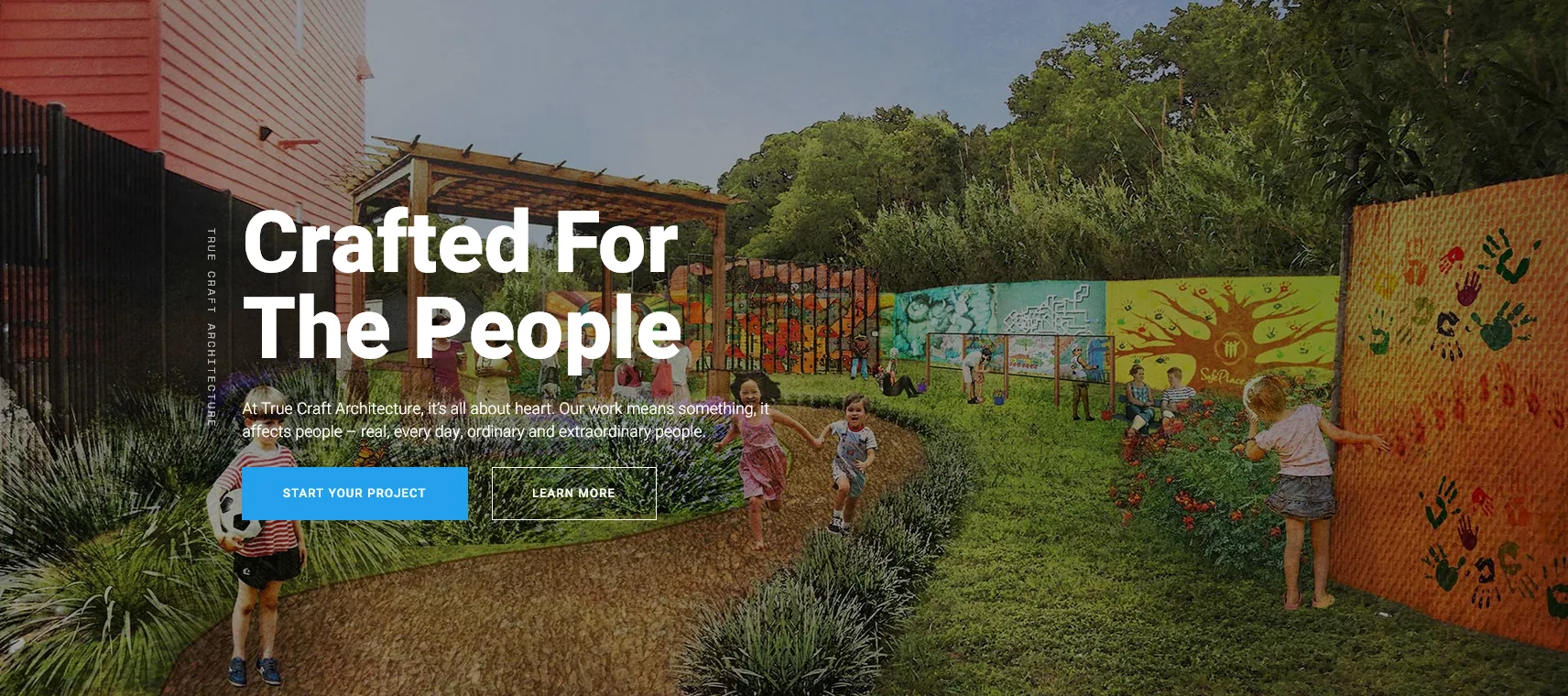
TC Architecture Firm already had a site with visual strength and a clear human message. As the firm grew from one architect into a stronger team, the website needed to grow with it.
Keep the core message.
The redesign should preserve what made the brand memorable while making the site clearer and easier for the right clients to act on.
Communicate the firm's growth.
The next version needs to show a capable architecture team with broader delivery capacity and real project experience.
Improve the lead path after launch.
The site becomes a baseline for ongoing improvement around message clarity, project proof, contact flow, search visibility, and conversion behavior.
Additional case studies in progress.
More case studies are being assembled carefully.
Additional redesign engagements are documented internally, but not every project should become a public case study immediately. A useful case study needs client permission, accurate context, screenshots that show the real work, and outcome language that does not overstate what the evidence supports.
That slower approach matters. Thin portfolio pages can look busy while saying very little. We would rather publish fewer examples with stronger context than fill the page with unnamed logos, vague claims, or performance numbers that have not been verified.
When a public case study is not available yet, the conversation can still be useful. We can usually talk through relevant patterns from similar projects: what had to be preserved, what had to change, and what kind of proof the next version of the site needed to make visible.
How we judge whether a redesign is ready to build.
Message clarity
What we look for: The homepage, service pages, and calls to action explain what the company does now.
Why it matters: A redesign should reduce buyer confusion, not hide it behind a new visual system.
Search protection
What we look for: Indexed URLs, ranking pages, metadata, schema, sitemaps, and redirects are mapped before launch.
Why it matters: Organic traffic is earned over time. The redesign should carry that value forward.
Proof depth
What we look for: Projects, team experience, screenshots, testimonials, certifications, or process proof support the claims.
Why it matters: Better copy cannot replace missing evidence. Proof decides how far the page can go.
Lead path
What we look for: Navigation, contact forms, phone links, service entry points, and follow-up expectations are clear.
Why it matters: The redesigned site needs a practical path from interest to conversation.
A good redesign starts by finding the value already on the site.
Before we change structure, layout, or copy, we look for the parts of the current site that already work. That can include a service page with search impressions, a project image people recognize, a phrase the founder uses naturally, a contact path that produces qualified leads, or an old URL with links pointing to it.
The goal is not to preserve everything. Some pages need to be rewritten. Some claims need better support. Some sections can be retired. The important part is making those decisions deliberately instead of treating launch as a reset.
- Existing rankings and indexed pages get mapped.
- Current lead paths and forms get tested.
- Strong proof carries forward into the new structure.
- Weak or stale proof gets marked as a sourcing need.
- Post-launch improvement starts from a known baseline.
Some proof belongs in the review process before it belongs on the page.
Not every useful detail is ready for the public site. A client may approve the project story but not the numbers. A screenshot may show the design work but also reveal private dashboard data. A ranking change may look encouraging in the first month but still be too early to claim as an outcome. Those details can still guide the redesign review without becoming public marketing copy.
That is why the work page separates published case studies from the evidence backlog. Published case studies should be specific, sourced, and approved. The backlog captures proof gaps that the brand can fill later: project photos, before-and-after screenshots, named testimonials, logo permissions, and measured outcomes. The page gets stronger as those items arrive, but the build should not invent them.
This keeps the site credible. It also gives the business a clear content backlog after launch. Instead of asking for generic portfolio additions, the next step is concrete: secure permission for the next case study, choose the screenshots, confirm the client language, and add the evidence where it supports the buying decision.
The same discipline applies to redesign claims across the site. If a result cannot be named, sourced, or tied to a real engagement, it should stay out of public copy until the brand can support it. That restraint is part of the proof strategy.
Tell us what the next version needs to do.
Send the current site, where the business is now, and what the redesign needs to accomplish.